PhD

ARCHITECTURE CHIANG MAI UNIVERSITY

Doctor of Philosophy Program in Architecture (International Program)

ARCHCMU

PROGRAM DESCRIPTION


Our Philosophy


Doctor of Philosophy in Architecture is an international, research-based degree in architecture. Aiming at integrating architecture studies with related fields, the program is designed to tackle the current regional and global issues which confront our built environments today meanwhile searching for sustainable alternatives for ongoing future problems and dynamics.

Between Tradition & Innovation
Nurturing in the peaceful, historic Lanna cultures long rooted and persisted in Southeast Asia, our PhD study focusing on the interrelationships between tradition and innovation in present and future contexts.

Knowledge that grows


Our academic staff of Doctor of Philosophy in Architecture have diverse background in architecture and related fields. Together they form the branches of knowledge thus allowing the students to explore the diverse research subjects of their interest.

Research platform: Two directions: diverse expertise


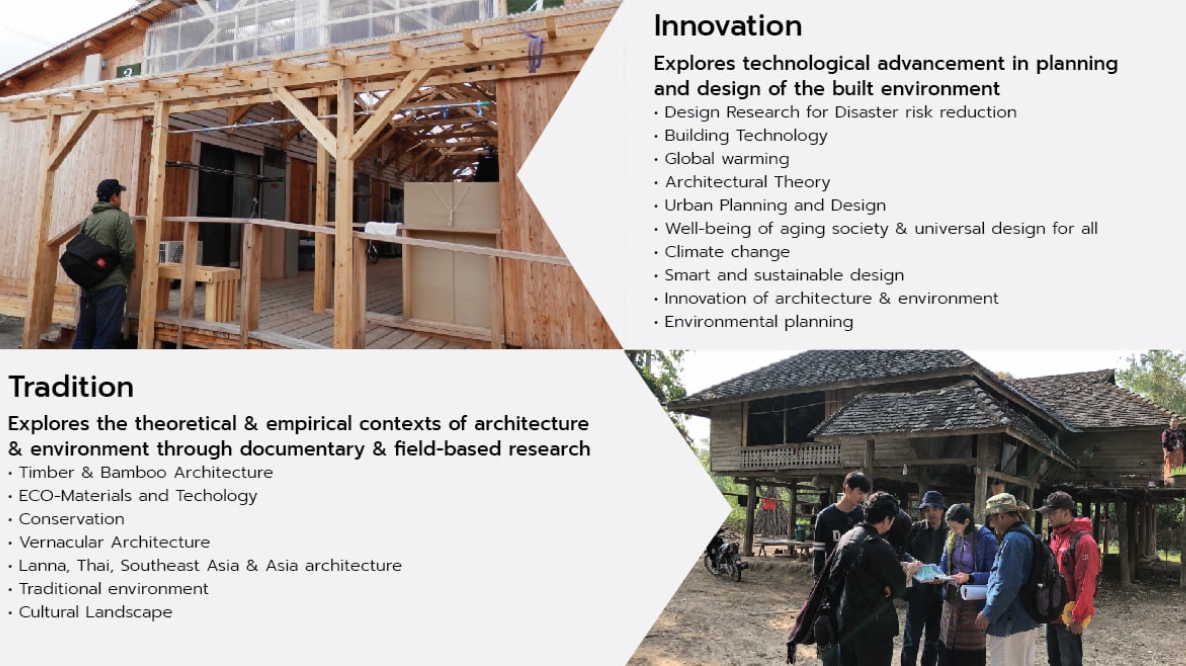
Our research platform is largely divided into two tiers: tradition and innovation. The first one, Tradition, explores the theoretical and empirical contexts of architecture and environment through documentary and field-based research. The second one, Innovation, Explores technological advancement in planning and design of the built environment. These two tiers are overlapped and interrelated, and the students can build up their research based on the combined two tiers. Our 20+ PhD staff comprise of diverse expertise ranging from architectural theories, vernacular architecture studies (specializing Thai, Lanna Southeast Asia and Asia), urban studies (urban architecture/urban planning/urban conservation), environmental planning and management (restorative /well-being/healing environments), aging society and universal design, energy conscious and tropical design, building and material technology (bamboo/timber/renewable materials), climate change and disaster management.
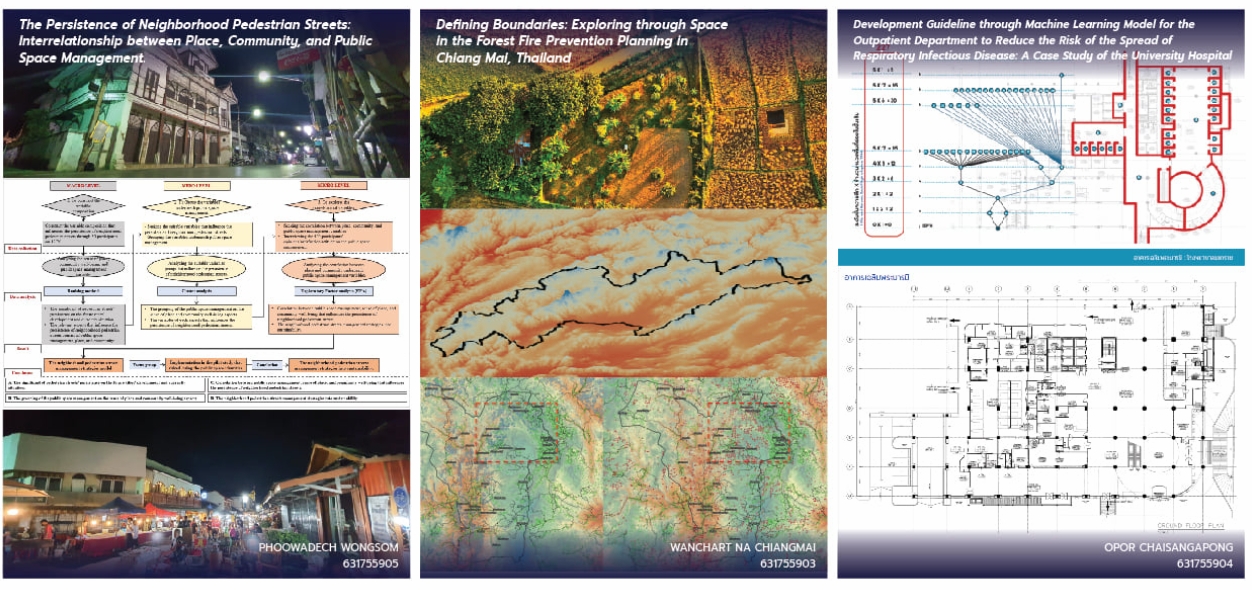
PhD. Student Researh


Publications from Ph.D. in Architecture (International Program)


  1. Laohaviraphap, N.; Waroonkun, T. Integrating Artificial Intelligence and the Internet of Things in Cultural Heritage Preservation: A Systematic Review of Risk Management and Environmental Monitoring Strategies. Buildings 2024, 14, 3979. https://doi.org/10.3390/buildings14123979
  2. Aiduang, W.; Jatuwong, K.; Jinanukul, P.; Suwannarach, N.; Kumla, J.; Thamjaree, W.; Teeraphantuvat, T.; Waroonkun, T.; Oranratmanee, R.; Lumyong, S. Sustainable Innovation: Fabrication and Characterization of Mycelium-Based Green Composites for Modern Interior Materials Using Agro-Industrial Wastes and Different Species of Fungi. Polymers 2024, 16, 550. https://doi.org/10.3390/polym16040550
  3. Teeraphantuvat, T.; Jatuwong, K.; Jinanukul, P.; Kumla, J.; Suwannarach, N.; Aiduang, W.; Waroonkun, T.; Oranratmanee, R.; Lumyong, S. Improving the Physical and Mechanical Properties of Mycelium-Based Green Composites Using Paper Waste. Polymers 2024, 16, 262. https://doi.org/10.3390/polym16020262
  4. Jinanukul, P.; Kumla, J.; Aiduang, W.; Thamjaree, W.; Oranratmanee, R.; Shummadtayar, U.; Tongtuam, Y.; Lumyong, S.; Suwannarach, N.; Waroonkun, T. Comparative Evaluation of Mechanical and Physical Properties of Mycelium Composite Boards Made from Lentinus sajor-caju with Various Ratios of Corn Husk and Sawdust. J. Fungi 2024, 10, 634. https://doi.org/10.3390/jof10090634
  5. Aiduang, W.; Jinanukul, P.; Thamjaree, W.; Kiatsiriroat, T.; Waroonkun, T.; Lumyong, S. A Comprehensive Review on Studying and Developing Guidelines to Standardize the Inspection of Properties and Production Methods for Mycelium-Bound Composites in Bio-Based Building Material Applications. Biomimetics 2024, 9, 549. https://doi.org/10.3390/biomimetics9090549
  6. Aiduang, W.; Jatuwong, K.; Luangharn, T.; Jinanukul, P.; Thamjaree, W.; Teeraphantuvat, T.; Waroonkun, T.; Lumyong, S. A Review Delving into the Factors Influencing Mycelium-Based Green Composites (MBCs) Production and Their Properties for Long-Term Sustainability Targets. Biomimetics 2024, 9, 337. https://doi.org/10.3390/biomimetics9060337
  7. Wongsom, P.; Waroonkun, T.; Lieorungruang, V.; Shummadtayar, U. Factor Influencing the Pedestrian Streets Management in Secondary Cities of Northern Thailand. Journal of Asian Architecture and Building Engineering 2025. https://doi.org/10.1080/13467581.2025.2467247
  8. Damrongrat, B.; Sararit, T.; Pokharatsiri, J.; Waroonkun, T.; Wongkaew, W.; Phunjanna, K. Digital Infrastructure and the Limits of Smart Urbanism: Evidence from a Panel Analysis and the Case of Wang Chan Valley. Smart Cities 2025, 8, 180. https://doi.org/10.3390/smartcities8050180

APPLICATION AND TUITION FEE


Applicants must submit the following documents:


  1. Portfolio showing the works during / after completed the bachelor’s degree and /or master’s degree
  2. Statement of Purpose
  3. 2 Recommendation Letters
  4. Brief of Thesis Proposal (not more than five A4 pages)

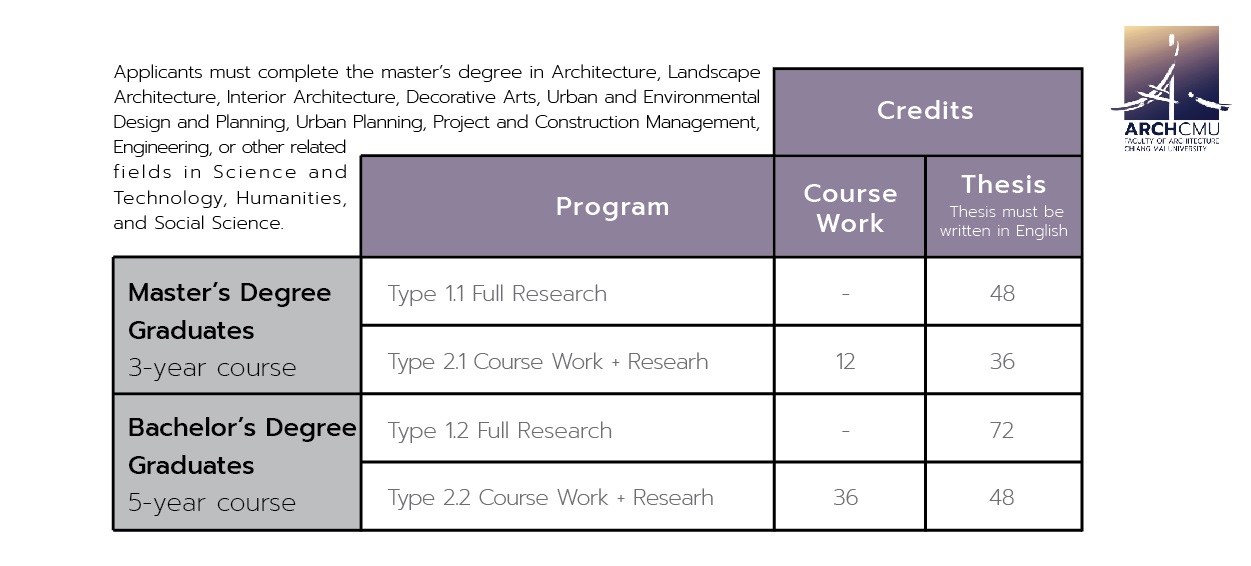
Program 1.1


  1. The admission process follows Chiang Mai University announcement on the admission in each academic year
  2. Applicants must complete the master’s degree in Architecture, Landscape Architecture, Interior Architecture, Decorative Arts, Urban and Environmental Design and Planning, Urban Planning, Project and Construction Management, Engineering, or other related fields in Science and Technology, Humanities, and Social Science.
  3. Applicants must have the English ability score that follows the announcement of the Graduate School, Chiang Mai University. For the Doctoral Degree Program, the English ability score requirements are as follows: CMU-eTEGS 65 or LELTS 5.5 or TOEFL PBT: 523 or ITP: 523 or CBT: 193 or IBT: 69 or CU-TEP 65% or TU-GET 65% or KU-PET 65%. Applicants of every Doctoral Degree Program must have the English ability score that reach the requirement, or else the Graduate School may accept the applicant as provisional student at first.
  4. Other qualifications follow the program committee discretion.

Program 1.2


  1. The admission process follows Chiang Mai University announcement on the admission in each academic year
  2. Applicants must have the minimum Cumulative Grade Point Average (CGPA) of 3.50.
  3. Applicants must complete the bachelor’s degree in Architecture, Landscape Architecture, Interior Architecture, Decorative Arts, Urban and Environmental Design and Planning, Urban Planning, Project and Construction Management, Engineering, or other related fields in Science and Technology, Humanities, and Social Science.
  4. Applicants must have the English ability score that follows the announcement of the Graduate School, Chiang Mai University. For the Doctoral Degree Program, the English ability score requirements are as follows: CMU-eTEGS 65 or LELTS 5.5 or TOEFL PBT: 523 or ITP: 523 or CBT: 193 or IBT: 69 or CU-TEP 65% or TU-GET 65% or KU-PET 65%. Applicants of every Doctoral Degree Program must have the English ability score that reach the requirement, or else the Graduate School may accept the applicant as provisional student at first.
  5. Other qualifications follow the program committee discretion.

Program 2.1


  1. The admission process follows Chiang Mai University announcement on the admission in each academic year
  2. Applicants must complete the master’s degree in Architecture, Landscape Architecture, Interior Architecture, Decorative Arts, Urban and Environmental Design and Planning, Urban Planning, Project and Construction Management, Engineering, or other related fields in Science and Technology, Humanities, and Social Science.
  3. Applicants must have the English ability score that follows the announcement of the Graduate School, Chiang Mai University. For the Doctoral Degree Program, the English ability score requirements are as follows: CMU-eTEGS 65 or LELTS 5.5 or TOEFL PBT: 523 or ITP: 523 or CBT: 193 or IBT: 69 or CU-TEP 65% or TU-GET 65% or KU-PET 65%. Applicants of every Doctoral Degree Program must have the English ability score that reach the requirement, or else the Graduate School may accept the applicant as provisional student at first.
  4. Other qualifications follow the program committee discretion.

Program 2.2


  1. The admission process follows Chiang Mai University announcement on the admission in each academic year
  2. Applicants must have the minimum Cumulative Grade Point Average (CGPA) of 3.50.
  3. Applicants must complete the bachelor’s degree in Architecture, Landscape Architecture, Interior Architecture, Decorative Arts, Urban and Environmental Design and Planning, Urban Planning, Project and Construction Management, Engineering, or other related fields in Science and Technology, Humanities, and Social Science.
  4. Applicants must have the English ability score that follows the announcement of the Graduate School, Chiang Mai University. For the Doctoral Degree Program, the English ability score requirements are as follows: CMU-eTEGS 65 or LELTS 5.5 or TOEFL PBT: 523 or ITP: 523 or CBT: 193 or IBT: 69 or CU-TEP 65% or TU-GET 65% or KU-PET 65%. Applicants of every Doctoral Degree Program must have the English ability score that reach the requirement, or else the Graduate School may accept the applicant as provisional student at first.
  5. Other qualifications follow the program committee discretion.

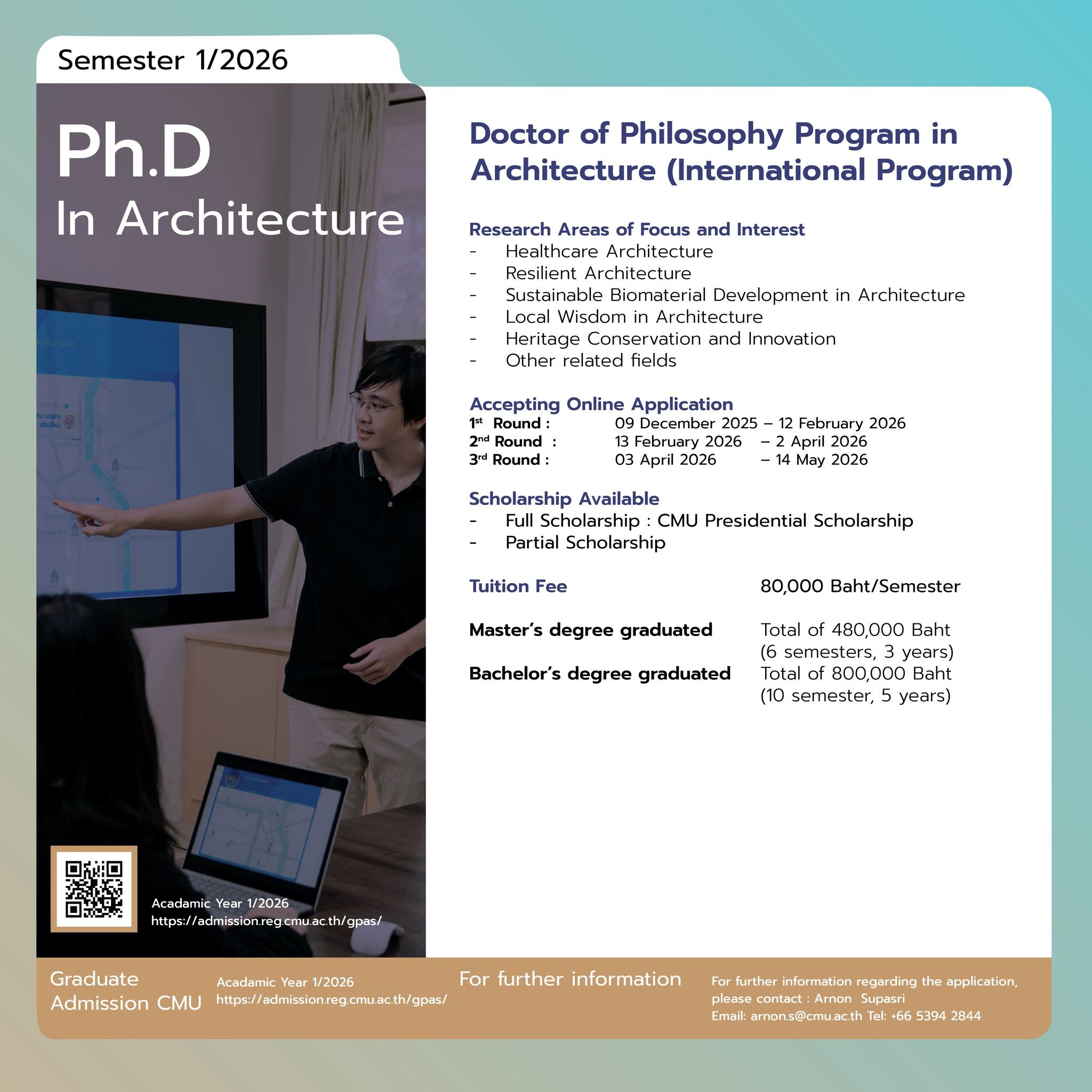
Tuition Fee


  • Program 1.1 & 2.1 (3 years course)
    480,000 Baht/course (80,000 Baht per semester)
  • Program 1.2 & 2.2 (5 years course)
    800,000 Baht/course (80,000 Baht per semester)

Publications from Ph.D. in Architecture (International Program)


  1. Laohaviraphap, N.; Waroonkun, T. Integrating Artificial Intelligence and the Internet of Things in Cultural Heritage Preservation: A Systematic Review of Risk Management and Environmental Monitoring Strategies. Buildings 2024, 14, 3979. https://doi.org/10.3390/buildings14123979
  2. Aiduang, W.; Jatuwong, K.; Jinanukul, P.; Suwannarach, N.; Kumla, J.; Thamjaree, W.; Teeraphantuvat, T.; Waroonkun, T.; Oranratmanee, R.; Lumyong, S. Sustainable Innovation: Fabrication and Characterization of Mycelium-Based Green Composites for Modern Interior Materials Using Agro-Industrial Wastes and Different Species of Fungi. Polymers 2024, 16, 550. https://doi.org/10.3390/polym16040550
  3. Teeraphantuvat, T.; Jatuwong, K.; Jinanukul, P.; Kumla, J.; Suwannarach, N.; Aiduang, W.; Waroonkun, T.; Oranratmanee, R.; Lumyong, S. Improving the Physical and Mechanical Properties of Mycelium-Based Green Composites Using Paper Waste. Polymers 2024, 16, 262. https://doi.org/10.3390/polym16020262
  4. Jinanukul, P.; Kumla, J.; Aiduang, W.; Thamjaree, W.; Oranratmanee, R.; Shummadtayar, U.; Tongtuam, Y.; Lumyong, S.; Suwannarach, N.; Waroonkun, T. Comparative Evaluation of Mechanical and Physical Properties of Mycelium Composite Boards Made from Lentinus sajor-caju with Various Ratios of Corn Husk and Sawdust. J. Fungi 2024, 10, 634. https://doi.org/10.3390/jof10090634
  5. Aiduang, W.; Jinanukul, P.; Thamjaree, W.; Kiatsiriroat, T.; Waroonkun, T.; Lumyong, S. A Comprehensive Review on Studying and Developing Guidelines to Standardize the Inspection of Properties and Production Methods for Mycelium-Bound Composites in Bio-Based Building Material Applications. Biomimetics 2024, 9, 549. https://doi.org/10.3390/biomimetics9090549
  6. Aiduang, W.; Jatuwong, K.; Luangharn, T.; Jinanukul, P.; Thamjaree, W.; Teeraphantuvat, T.; Waroonkun, T.; Lumyong, S. A Review Delving into the Factors Influencing Mycelium-Based Green Composites (MBCs) Production and Their Properties for Long-Term Sustainability Targets. Biomimetics 2024, 9, 337. https://doi.org/10.3390/biomimetics9060337
  7. Wongsom, P.; Waroonkun, T.; Lieorungruang, V.; Shummadtayar, U. Factor Influencing the Pedestrian Streets Management in Secondary Cities of Northern Thailand. Journal of Asian Architecture and Building Engineering 2025. https://doi.org/10.1080/13467581.2025.2467247
  8. Damrongrat, B.; Sararit, T.; Pokharatsiri, J.; Waroonkun, T.; Wongkaew, W.; Phunjanna, K. Digital Infrastructure and the Limits of Smart Urbanism: Evidence from a Panel Analysis and the Case of Wang Chan Valley. Smart Cities 2025, 8, 180. https://doi.org/10.3390/smartcities8050180
-->

Doctor of Philosophy Program in Architecture (International Program)


Assistant Professor Dr.
Pandin Ounchanum
pandin.oun@cmu.ac.th
053-942801
Associate Professor Dr.
Tanut Waroonkun
tanut.w@cmu.ac.th
Assistant Professor Dr.
Titaya Sararit
titaya.s@cmu.ac.th


(PHD) Information Contact


Mr.
Arnon Supasri
arnon.s@cmu.ac.th
053-942844